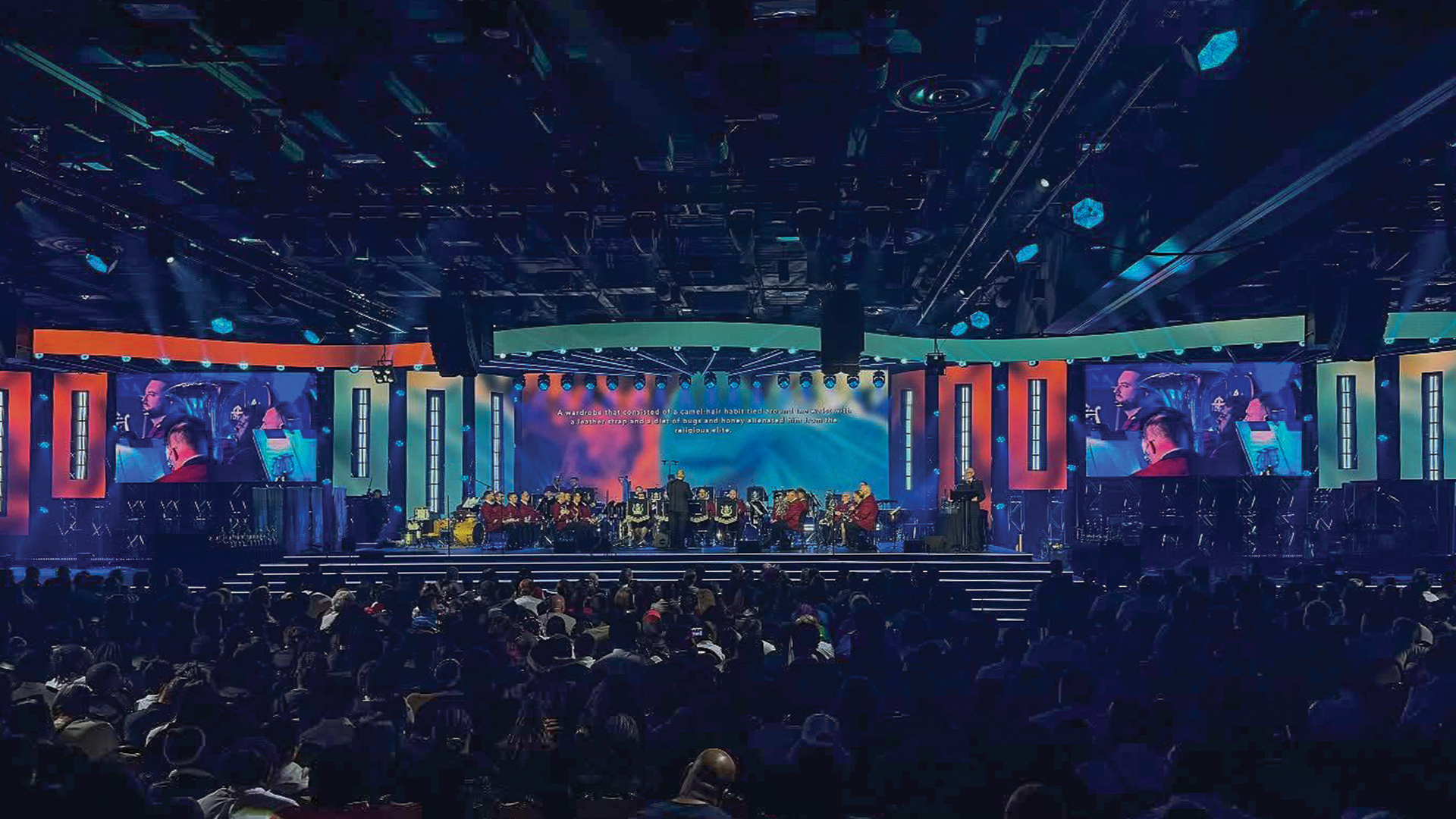
Beyond the Rectangle: LED Innovation at Tech Events
The technology industry prides itself on disruption and innovation, yet countless tech conferences project those values onto the same rectangular LED wall configurations that haven’t evolved in a decade. When Apple, Google, and Tesla unveil products designed to change industries, their stage environments should embody that ambition. Innovative LED shapes provide the visual vocabulary matching forward-thinking content.
The evolution of shaped LED at tech events traces to the mid-2010s when productions for companies like Salesforce at Dreamforce and Microsoft at Build began experimenting with non-rectangular configurations. These early innovations—curved walls, floating elements, dimensional structures—proved that audiences respond to stage architecture that physically manifests the innovation being discussed verbally.
Today’s LED manufacturing capabilities enable shapes that seemed impossible five years ago. Companies including ROE Visual, Leyard, INFiLED, and SiliconCore produce panels designed specifically for curved, angled, and three-dimensional applications. The technology exists; the design imagination to deploy it effectively separates memorable events from forgettable ones.
Curved Walls and Concave Environments
Curved LED walls wrap content around audiences, creating immersive environments rather than flat backdrops. The GSMA Mobile World Congress stage designs have featured sweeping concave configurations that place attendees within video content rather than in front of it. This environmental approach transforms passive viewing into participatory experience.
The engineering of curved installations requires panels designed for angular connection. Products like the ROE Visual CB5 Curved series feature adjustable panel connections enabling curves from gentle 20° arcs to tight 5° radiuses. The Absen A27 similarly accommodates varied curve geometries through its modular connection system.
Content creation for curved surfaces demands specialized 3D mapping approaches. Software platforms including Disguise, Notch, and TouchDesigner enable designers to preview how content appears across curved geometries before deployment. The visual effect of content appearing to extend beyond physical boundaries—particularly effective for horizon imagery—depends on accurate content mapping.
Floating and Suspended LED Elements
Suspended LED elements—floating panels, hanging cubes, aerial ribbons—create vertical dimension that ground-based installations cannot achieve. The Google I/O developer conferences have featured floating LED elements that visually connect stage and ceiling, establishing venue scale while delivering content visible from any seat.
The rigging requirements for suspended LED installations demand ETCP-certified riggers and engineered load calculations. Each floating element requires independent support points, typically from venue steel using CM Lodestar or JR Clancy chain motors. The weight distribution across multiple elements must account for dynamic forces during movement programming.
Wireless data distribution simplifies suspended element installations by eliminating the cable runs that complicate flying video. Systems from Enttec and Luminex enable wireless DMX and Art-Net transmission to suspended elements, though most professional installations maintain hardwired connections for reliability.
Dimensional Shapes: Cubes, Spheres, and Pyramids
Three-dimensional LED shapes including cubes, spheres, and pyramids command attention through their sculptural presence. CES exhibits from major manufacturers regularly feature spherical LED elements that audiences photograph extensively, generating social media impressions extending far beyond physical attendance.
The LED sphere represents perhaps the most technically challenging shape, requiring custom-curved panels or flexible LED materials. Products from Samsung and SNA Displays enable spherical configurations, though fabrication typically requires custom engineering for each diameter specification.
Pyramidal structures using standard panels in angled configurations create dramatic focal points without custom fabrication. Four triangular faces assembled from progressively sized rectangular panels approximate pyramid geometry at lower cost than true triangular panels. The visual impact—particularly effective for product reveals—justifies engineering investment.
Transparent and Layered LED Configurations
Transparent LED products from Glux, Leyard, and Samsung enable layered visual compositions where audiences see through foreground video to physical elements beyond. Tech conferences leveraging transparency create depth illusions—floating data visualizations appearing between audience and speaker—that opaque surfaces cannot achieve.
The installation methodology for transparent LED differs from conventional panels. These products typically mount to aluminum framework systems using custom brackets accommodating their unique mechanical design. The sightline calculations must account for both LED visibility angles and transparency characteristics.
Content design for transparent applications requires restraint. When every pixel commands attention equally, visual hierarchy collapses. Effective transparent LED content concentrates high-intensity elements at specific screen areas while allowing background visibility through intentionally minimal regions.
Integration with Stage Architecture
The most innovative LED shapes integrate with overall stage architecture rather than existing as isolated elements. Productions for Amazon Web Services at re:Invent have demonstrated how LED shapes combine with scenic elements, lighting fixtures, and presenter positions into unified environments.
Scenic fabrication companies including ATOMIC Design, Scenic Solutions, and ShowTech collaborate with LED integrators to create hybrid structures where physical architecture and video surfaces merge seamlessly. These collaborations produce elements like illuminated staircases with LED risers, branded arches with integrated video surfaces, and dimensional logos combining sculpted materials with active pixels.
Lighting integration enables LED shapes to participate in broader stage designs beyond their video content function. The DMX control that powers LED panels also addresses moving lights, atmospheric effects, and architectural illumination—enabling coordinated visual statements across all stage elements.
Budget and Production Considerations
The cost premium for innovative LED shapes versus standard rectangular configurations ranges from 50% for gentle curves to 300%+ for custom fabrications. Productions must weigh this investment against communication objectives: Does the content message justify distinctive delivery, or would standard presentation suffice?
Lead time requirements for shaped LED installations exceed standard deployments significantly. Custom fabrication—whether structural engineering, panel manufacturing, or content creation—requires weeks or months of advance planning. Productions seeking innovative shapes must commit during early planning phases, not as late-stage additions.
Rental inventory availability affects shaped LED feasibility. Major rental houses including PRG, 4Wall Entertainment, and VER maintain curved panel and cube inventory, but custom shapes typically require purchase or custom fabrication rather than standard rental.
Case Studies in Tech Conference Innovation
The Apple product launch events set industry benchmarks for LED innovation—though Apple typically achieves impact through content excellence on relatively conventional surfaces rather than shape experimentation. Their lesson: shape innovation supports rather than substitutes for content quality.
Nvidia GTC conferences have featured LED configurations integrating company branding into structural shapes—the distinctive Nvidia eye logo realized as dimensional LED elements that double as functional video surfaces. This approach demonstrates how brand identity can drive shape decisions.
When your tech conference requires visual environments matching the innovation you’re announcing, innovative LED shapes provide the physical manifestation of forward-thinking communication. The technology exists; the creative vision to deploy it effectively remains the differentiating factor between productions that disappear from memory and those that define industry expectations.
