When Sound Systems Develop Main Character Energy
The Ambition of Amplified Aluminum
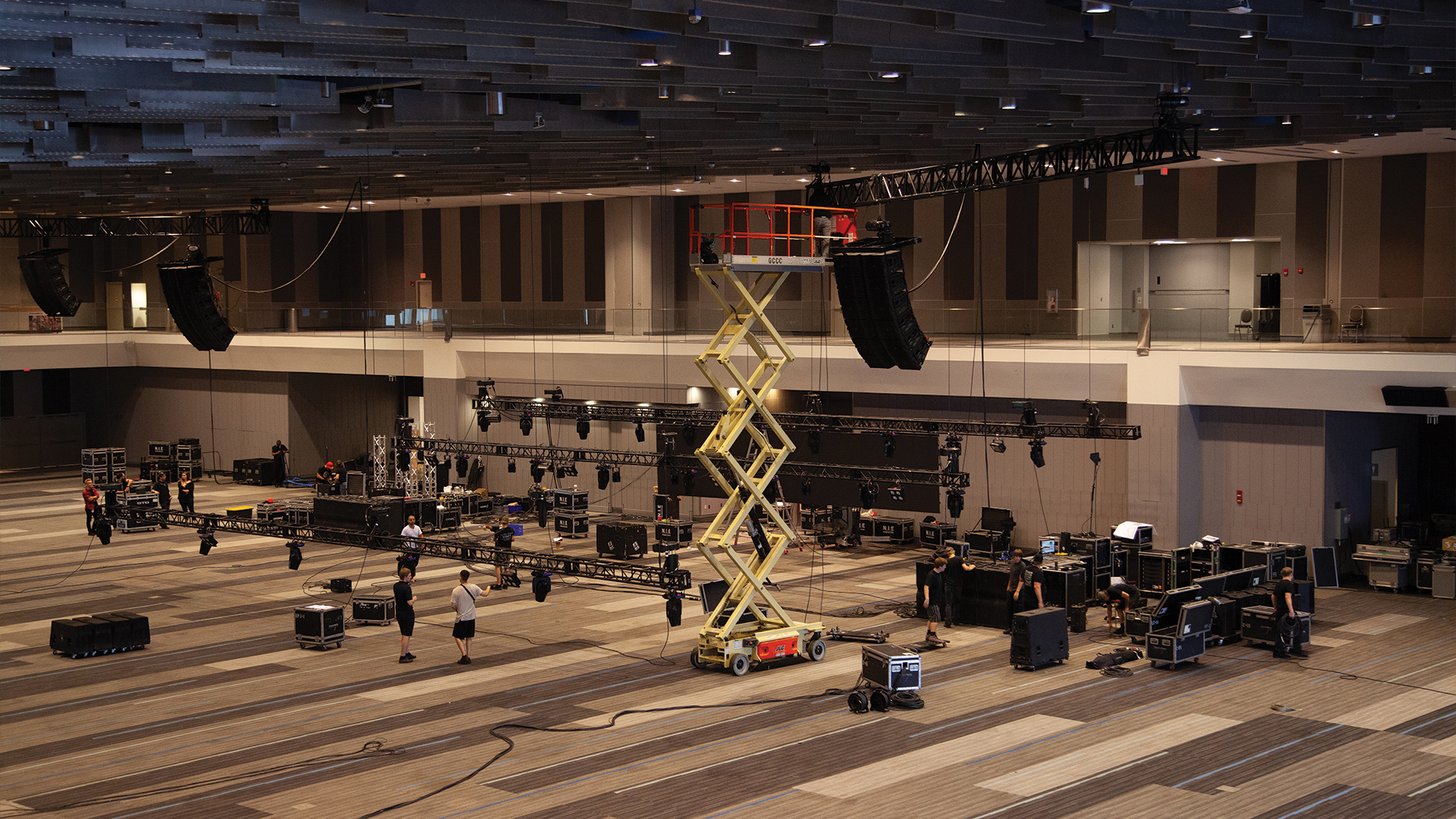
JBL VTX A12 line arrays hang from rigging points designed to disappear into audiences’ peripheral vision. Meyer Sound PANTHER systems position drivers for optimal coverage while remaining visually unobtrusive. L-Acoustics K2 cabinets angle precisely to serve every seat while their infrastructure fades into stage architecture. This is the intended relationship: PA systems should be felt, not seen, serving the artist rather than demanding attention. Sometimes, the systems disagree.
The first PA towers were simply stacked cabinets, obvious and unapologetic about their presence. The transition to flown line arrays in the 1990s represented both technological advancement and philosophical statement: the system should serve the music rather than dominating the visual landscape. Modern audiences expect sonic excellence without visible source. When systems assert their presence, the contract breaks.
Mechanical Attention-Seeking
During a 2022 stadium tour, a d&b audiotechnik GSL system began producing audible creaking sounds during quiet passages. The system technician running ArrayCalc simulations found nothing wrong structurally. All load cells reported appropriate values. The rigging was flawless. Yet the system groaned and shifted throughout the show, injecting its own percussion into acoustic songs.
Investigation revealed thermal expansion effects that no modeling had predicted. The specific combination of indoor temperature cycling and sun exposure on certain cabinet faces created differential expansion that produced audible noise. The system wasn’t failing; it was expressing discomfort with its environment. Subsequent shows included thermal management protocols that minimized the phenomenon.
Touring audio professionals share stories of systems that seem to announce themselves. Subwoofer arrays that resonate at frequencies outside their programmed content. Delay towers that produce audible hum only during quiet moments. Ground-stacked systems that shift position enough to affect coverage throughout shows.
Electronic Proclamations
Beyond mechanical sounds, PA systems sometimes produce electronic artifacts that command attention. Power supply noise, RF interference, and ground loops can inject unwanted signals that the system reproduces with the same fidelity it brings to intended content.
The 2017 Coachella incident involved a Meyer Sound LYON system producing intermittent noise that seemed to correspond to lighting cues. Extensive troubleshooting traced the issue to PWM dimmer interference traveling through shared ground paths. The system was helpfully amplifying electromagnetic pollution generated by the production’s own lighting rig.
Dante networks and Milan AVB systems have largely solved the ground loop problems that plagued analog audio for decades. But new network topologies introduce new potential for failure. A switch failure or network storm can produce audio artifacts that make the PA system sound like it’s protesting its treatment.
The Psychology of Attribution
When audiences notice PA systems, they rarely understand what they’re perceiving. Unusual sounds get attributed to the performance rather than the reproduction system. Clicks, pops, and hums become part of the musical experience, potentially damaging the artist’s reputation for problems entirely outside their control.
FOH engineers develop acute sensitivity to system artifacts precisely because of this attribution problem. They know that audiences will blame artists for technical failures, even when those failures occur in equipment the artist neither owns nor controls. This responsibility makes system-generated sounds particularly stressful to address.
The production rider requirements that artists include represent attempts to control these risks. Demanding specific console models, specific PA system brands, and specific processing platforms allows artists to work with familiar equipment that reduces surprise. Yet even familiar systems can develop unfamiliar behaviors in new environments.
Historic Solo Attempts
The 1983 US Festival featured one of the largest PA systems ever deployed at that time, designed by Clair Brothers Audio. Historical accounts describe moments when the system seemed to take on a life of its own, producing sounds that bore little relationship to the performances being amplified. Heat, power fluctuations, and the unprecedented scale of the deployment created conditions where technology exceeded human control.
Grateful Dead’s Wall of Sound from 1974 represents perhaps the ultimate expression of PA system as performer. Jerry Garcia described the system as “the greatest single thing we ever did,” but it was eventually retired partly because it had become as much of a star as the band itself. The system’s visual dominance and logistical demands had made the PA the show.
Contemporary immersive audio installations like Meyer Sound Constellation deliberately blur the line between reproduction system and artistic element. When the room itself becomes the instrument, the system’s “performance” becomes intentional rather than accidental.
Managing System Egos
System optimization has become increasingly sophisticated precisely to keep PA systems in their supporting roles. Smaart measurements and EASE Focus predictions help engineers ensure that systems reproduce only what they’re supposed to reproduce.
Maintenance protocols have similarly evolved. Regular inspection of mechanical components prevents the thermal and structural issues that generate unwanted sounds. Firmware updates address electronic quirks before they become performance problems. Network monitoring catches digital issues before they reach outputs.
Yet systems will continue occasionally demanding attention. The complexity of modern PA installations means that unpredictable interactions will occur despite best efforts at prevention. The professional response is not surprise but preparedness: backup plans, troubleshooting protocols, and the calm competence that addresses problems without audiences ever knowing anything went wrong.
The PA towers aren’t actually trying to perform. They’re complex electromechanical systems operating near their design limits in challenging environments. But the anthropomorphizing isn’t entirely unfair. These systems do seem to develop personalities, favored setups, and preferred conditions. Learning those personalities, like learning to work with any temperamental performer, is part of the craft of live production.
