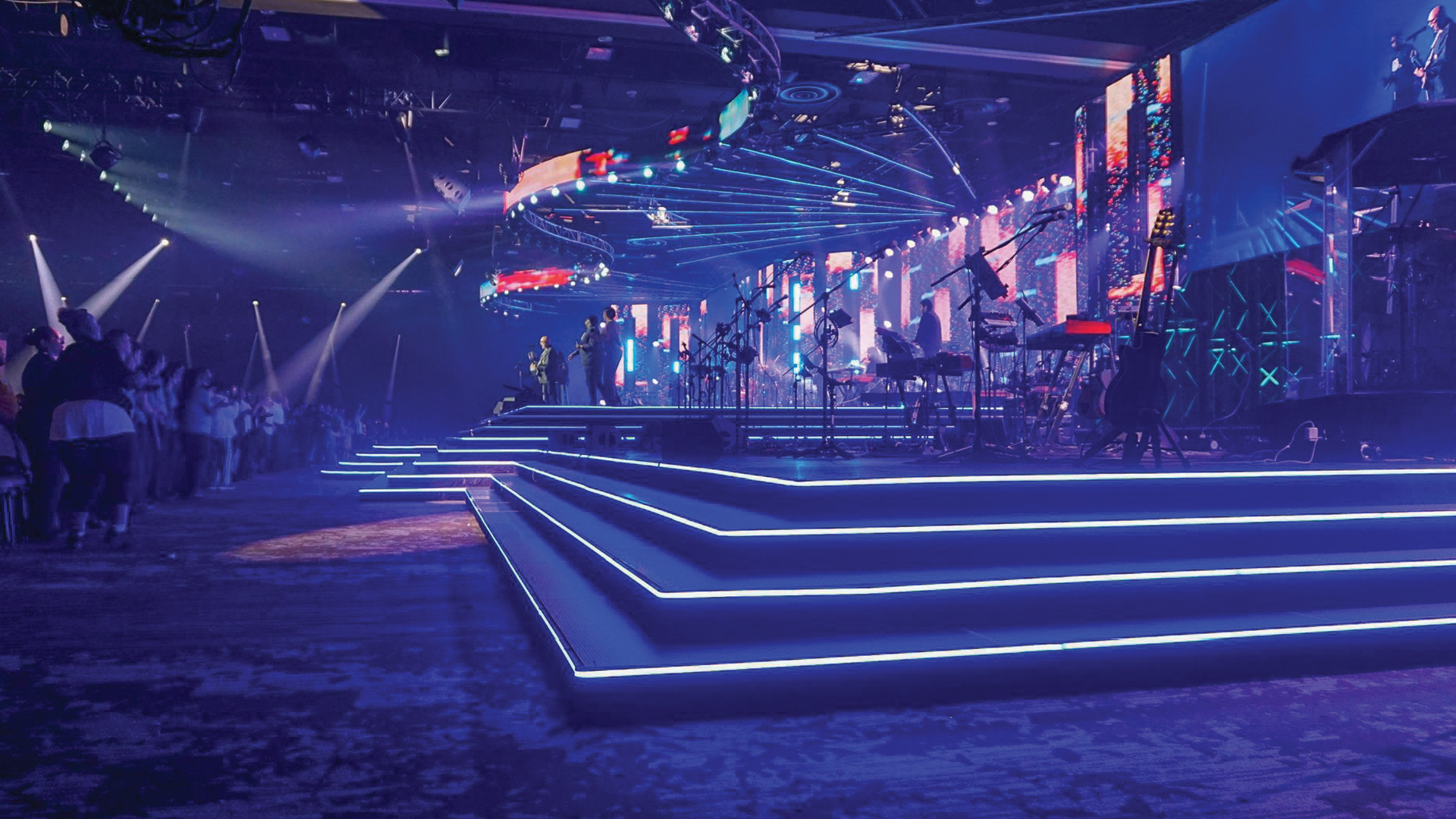
The trucks arrived at six in the morning carrying forty tons of equipment and zero documentation. The production manager had the stage dimensions and a photograph from a previous build. The local crew had coffee and determination. What followed became legend in live event production circles—a masterclass in improvisation that nobody would choose to repeat.
The Documentation Disaster
Professional touring productions generate extensive documentation that travels with the equipment. AutoCAD drawings specify every truss position. Vectorworks files detail lighting and audio hangs. Load calculation spreadsheets document weight distribution across pickup points. This documentation ensures that crews at each venue can reproduce the design accurately.
When documentation fails to arrive—whether through email mishap, hard drive failure, or simple human error—productions face choices ranging from delay to improvisation. The costs of delay often exceed the risks of building from experience, pushing crews into situations where collective knowledge must substitute for written specifications.
The Veteran’s Memory Palace
Every experienced stagehand carries mental libraries of previous builds that substitute for missing documentation in emergencies. The head rigger who worked this tour three years ago remembers the general configuration. The audio crew chief recognizes the L-Acoustics K1 system and knows standard deployment patterns. The lighting technician identifies fixture types and can estimate power distribution requirements.
This distributed expertise becomes collaborative intelligence during undocumented builds. Crew members share remembered details, cross-reference observations, and collectively reconstruct specifications that should have arrived on paper. The process resembles archaeological investigation—interpreting equipment artifacts to understand the design intentions behind them.
Reading the Road Cases
Professional road cases often carry labels, numbering systems, and color codes that reveal packing logic. A crew experienced with tour logistics can decode these markings to understand assembly sequences. Cases numbered 1-20 likely contain elements that should be deployed first. Color-coded tape indicates department ownership—yellow for lighting, blue for audio, green for staging.
The truck pack itself communicates assembly order. Items loaded last come out first, suggesting they should be deployed earliest. Experienced truck loaders follow consistent logic that survives documentation failure—the physical arrangement of equipment contains embedded instructions for those who know how to read them.
The Truss Puzzle
Structural elements present the greatest challenge in undocumented builds. Tyler Truss and Prolyte sections connect through standardized systems, but specific configurations require careful planning to ensure structural integrity. Without drawings, riggers must determine span lengths, load ratings, and connection sequences through careful equipment inspection.
The CM Lodestar motors packed with the truss indicate lifting capacity requirements. The span sets included with each truss section suggest attachment point spacing. Experienced riggers triangulate these physical clues to reconstruct rigging plots that should have been specified in advance.
Power Distribution Deduction
Electrical systems require precise planning that documentation normally provides. The power distro racks packed with the touring system reveal overall power requirements through their circuit configurations. A 400-amp three-phase service main disconnect suggests total system draw. The Socapex and PowerCON outputs indicate load distribution patterns.
The venue electrician becomes crucial during undocumented builds, providing local knowledge about power availability and connection requirements. Together with the touring power tech, they determine safe load distribution across available circuits—a collaboration that normally follows predetermined specifications but can function through shared expertise when documentation fails.
The Audio System Assembly
Major PA systems from d&b audiotechnik and Meyer Sound deploy in configurations determined by venue acoustics and coverage requirements. Without specifications, audio crews reference the ArrayCalc or MAPP 3D software on their laptops, inputting venue dimensions to generate appropriate configurations.
The quantity of cabinets packed indicates intended array size. The bumper and rigging hardware included suggests flying configuration. The amplifier racks with pre-labeled drive lines reveal signal distribution patterns. Experienced audio engineers reconstruct system designs from these physical clues, achieving coverage that approximates documented specifications.
The Lighting Puzzle
Fixture placement presents unique challenges without lighting plots. The grandMA3 console contains the show file with programmed cues—which provides clues about intended fixture positions through the parameters each cue addresses. An experienced lighting programmer can reverse-engineer positioning from the show data, determining where fixtures must hang to achieve the programmed effects.
The fixture manifest—counting Robe MegaPointes, Clay Paky Mythos, and ETC Source Fours as they emerge from cases—establishes what resources exist. The cable runs packed with the lighting system suggest signal distribution topology. The DMX addresses set on each fixture reveal the console’s expectations about unit identification.
The Time Pressure Reality
Undocumented builds occur within the same load-in schedules that documented builds must meet. Doors open at a specified time regardless of documentation status. The tour manager maintains timeline pressure while crews improvise solutions to problems that should never have existed.
This pressure produces remarkable efficiency from experienced crews. Decisions that might take hours of deliberation in normal circumstances compress into minutes. The production team operates in high-performance mode, drawing on collective expertise that only emerges under genuine pressure. The stage rises through collaborative intelligence that documentation normally makes unnecessary.
Lessons From Undocumented Builds
Crews that survive undocumented builds emerge with enhanced skills and stronger team bonds. The experience demonstrates capabilities that routine operations never reveal. The local crew that assembles a stage from equipment clues rather than written specifications has proven competence that no certification can measure.
These experiences also reinforce the value of proper documentation. The stress, risk, and near-misses that characterize undocumented builds motivate everyone involved to ensure documentation arrives reliably for future productions. The production manager who survives one such build becomes meticulous about advance communication. The crew chief who improvises a rigging plot develops deeper appreciation for the engineers who normally provide them.
The stage that rises without instructions stands as testament to human adaptability and collaborative expertise. It also serves as warning—the show went on, but nobody wants to repeat the experience.
