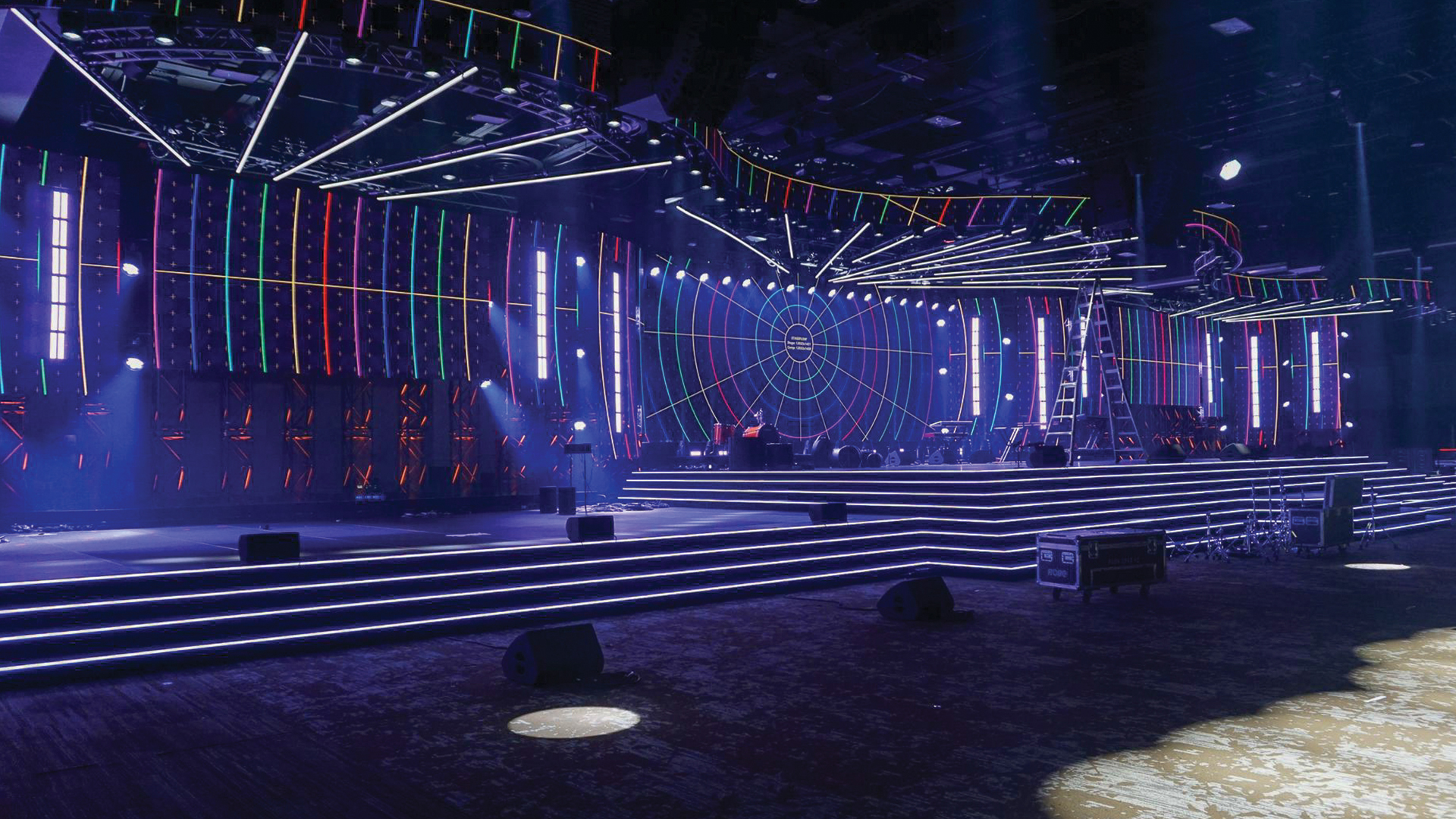
Historic and legacy venues are among the live event industry’s most treasured and most technically frustrating environments. The Royal Albert Hall, Carnegie Hall, and hundreds of comparable regional performing arts venues worldwide were designed and built before the existence of DMX512, Dante audio networking, HDMI signals, or the concept of an LED wall. Their walls, floors, ceilings, and infrastructure represent decades of architectural decisions made in a completely different technological context — and the challenge of deploying modern AV production technology into them without damaging the building, violating the preservation covenant, or simply failing to achieve the technical result that the modern show demands is a recurring exercise in creative compromise, patient engineering, and very careful negotiation with venue management.
Power Infrastructure: The Most Consistent Bottleneck
The power infrastructure of a historic venue is typically its most significant production constraint. Buildings constructed before 1970 frequently have single-phase power distribution throughout most of the performance space, with three-phase supplies limited to the stage area. Modern event production — particularly LED wall systems, large audio amplifier racks, and full intelligent lighting rigs — requires substantial three-phase power distributed throughout the venue: at FOH position, at side stage, at delay tower positions in the audience. Running temporary three-phase distribution cable from the stage power source to these positions involves routing through spaces that frequently have no conduit infrastructure, no cable trays, and surfaces that cannot be penetrated or drilled without heritage authority approval. Generator supplementation — placing temporary generators outside the building and cabling in through heritage-approved penetration points — is the standard solution, but adds cost and logistical complexity that must be scoped and budgeted in pre-production.
Network Infrastructure in Pre-Digital Buildings
Deploying Dante audio networking, Art-Net/sACN lighting control, NDI video, and show control protocols in a building with no Cat6 or fiber infrastructure requires a temporary data network installation that is itself a significant production task. Wireless networking — using Wi-Fi 6 access points from Cisco or Ubiquiti — is sometimes proposed as the solution, but professional audio-visual systems require deterministic, low-latency networking that consumer Wi-Fi architectures fundamentally cannot provide in the RF-congested environment of a large event. The reliable solution is temporary structured cabling — pulling Cat6 or fiber through the venue using surface-mounted cable trunking, temporary overhead cable hangers, and heritage-approved surface-attached conduit. This installation must respect the venue’s surfaces: drilling into historic plasterwork, stone columns, or listed woodwork is typically prohibited regardless of production schedule pressure.
Rigging in Certified vs. Non-Certified Overhead Structures
Many historic performing arts venues have overhead rigging infrastructure that was installed before modern safety standards were codified — or has been modified and extended by successive productions without a consistent engineering record. The flying system in a Victorian theater may have originally been rated for a specific maximum load that nobody has formally verified in decades. Before any production-critical load is attached to historic overhead structure, structural engineering certification of the specific attachment points and their current load ratings is mandatory — not optional. This certification takes time and costs money, and venue management that hasn’t commissioned it recently may be resistant to the implication that their rigging infrastructure needs verification. The production company that attaches load to uncertified structure owns the liability for any resulting failure, regardless of what the venue’s marketing materials suggest about their technical capability.
Acoustic Modification: What You Can and Can’t Change
Many historically significant venues are acoustically distinctive — and acoustically problematic for modern live production formats. The reverb time that makes a Victorian concert hall magnificent for unamplified orchestral music creates intelligibility problems for conference speech and feedback vulnerability for amplified music. The instinct to solve this with sound-absorbing treatment — acoustic panels, drape, carpet — is frequently constrained by heritage preservation requirements that prohibit physical alteration of the room’s acoustic surfaces. The professional solution is active acoustic management: deploying directional line array systems positioned to minimize reverb excitation, using digital signal processing with advanced room correction algorithms like Alcons LR7 or L-Acoustics Soundvision optimized beams, and embracing directional subwoofer arrays — cardioid or end-fire configurations — that reduce low-frequency energy coupling into the room’s modal resonances.
Venue Relationship Management as a Technical Strategy
In legacy and historic venues, the most powerful technical tool available to a production company is the venue relationship. Venue technical directors who have managed the same building for years possess institutional knowledge — about which structural members are actually load-bearing, which power circuits share breakers with permanent building systems, which cable routes have been used by previous productions — that is invisible in any official documentation. Investing in genuine collaborative relationships with venue technical staff — treating them as expert partners rather than access providers — consistently reveals solutions that paper-only pre-production misses. Production companies with strong reputations at specific venues — the mutual respect that builds over multiple successful events — routinely gain access to building accommodations, creative solutions, and flexibility on restrictions that first-time visitors never discover.
